
How to Choose a Modest Dress Online in Saudi Arabia: Length, Fabric & Fit

Hem and sleeve length usually decide whether a dress gives you the coverage you want. Size, fit and fabric decide whether you’ll be comfortable wearing it. Online, you’re judging all of this from numbers and photographs, and a few of those numbers matter more than the rest.
Some shoppers in Saudi Arabia wear a dress on its own, and others wear it under an abaya or another layer. The checks below hold for both. The examples come from OurDve dresses, which list their measurements.
Start With Length, Then Look at Sleeves and Neckline
Take a dress you already wear and like, lay it flat and measure it. Measure the dress you’re considering the same way, so the comparison is fair. Then put on your own dress and note where the hem and sleeves end on you. The gap between the two lengths shows roughly how much shorter or longer the new one will sit.
Here is what that looks like with two OurDve dresses:
| Diba Dress – Blue | Sage Dress – Beige | |
|---|---|---|
| Fabric | Cotton | Poplin |
| Fit | Regular | Loose |
| Listed dress length | 50 inches | 54 inches |
| Listed sleeve length | 22 inches | 21 inches |
Side by side, the Sage Dress runs four inches longer, yet its sleeves are an inch shorter. A longer hem doesn’t guarantee longer sleeves. How either number lands on you depends on your height, which is why a reference dress works better than guessing.
Neckline and cuffs change the picture too. A collar frames the upper body differently from a round neckline, and a fitted cuff sits very differently from a wide sleeve. Two dresses with the same listed length can give quite different coverage once you factor these in.
Use Body Measurements for Size, and Fit for Shape
OurDve’s size charts list bust, waist, hip and shoulder measurements. These are body measurements, so measure yourself rather than a dress from your wardrobe, then compare your numbers with the chart.
Size and fit are separate things. The chart helps you pick a size, while fit describes the shape the dress is cut to have. A regular fit follows the body more closely, and a loose fit is roomier through the body. In the table above, the Diba Dress is regular fit and the Sage Dress is loose fit. Neither is the safer choice for modest dressing. It depends on the coverage and shape you prefer. What matters is how you like a dress to sit at the shoulders, chest, waist and arms, and how much space you want for sitting, walking or driving.
If you fall between two sizes, decide which measurement you least want to compromise on. Some women want extra room at the bust and hips, and others care most about how the shoulders sit. If you often wear an abaya over your dress, sleeve width and overall volume are worth checking, since both affect how the two layers sit together.
Read the Fabric Details Alongside the Cut
A fabric name helps, but it doesn’t describe the whole dress. Cotton is a fibre, and poplin is a weave that can be made from cotton, so the two aren’t always opposites. Neither name tells you how the dress will look or hang. The cut and finishing do a lot of that work.
Start with the skirt. A straight cut gives a cleaner outline, and gathers add fullness. Then look at the cuffs, neckline, front opening and any texture worked into the fabric. Zoom in on the product photos, because these details are usually easiest to judge there.
The Whimsy Dress – Beige shows why. It’s cotton, with multicoloured floral embroidery along the front placket, cuffs and back yoke, and honeycomb smocking at the back. Most of its character comes from that handwork, so the full description tells you more than the word “cotton” does.
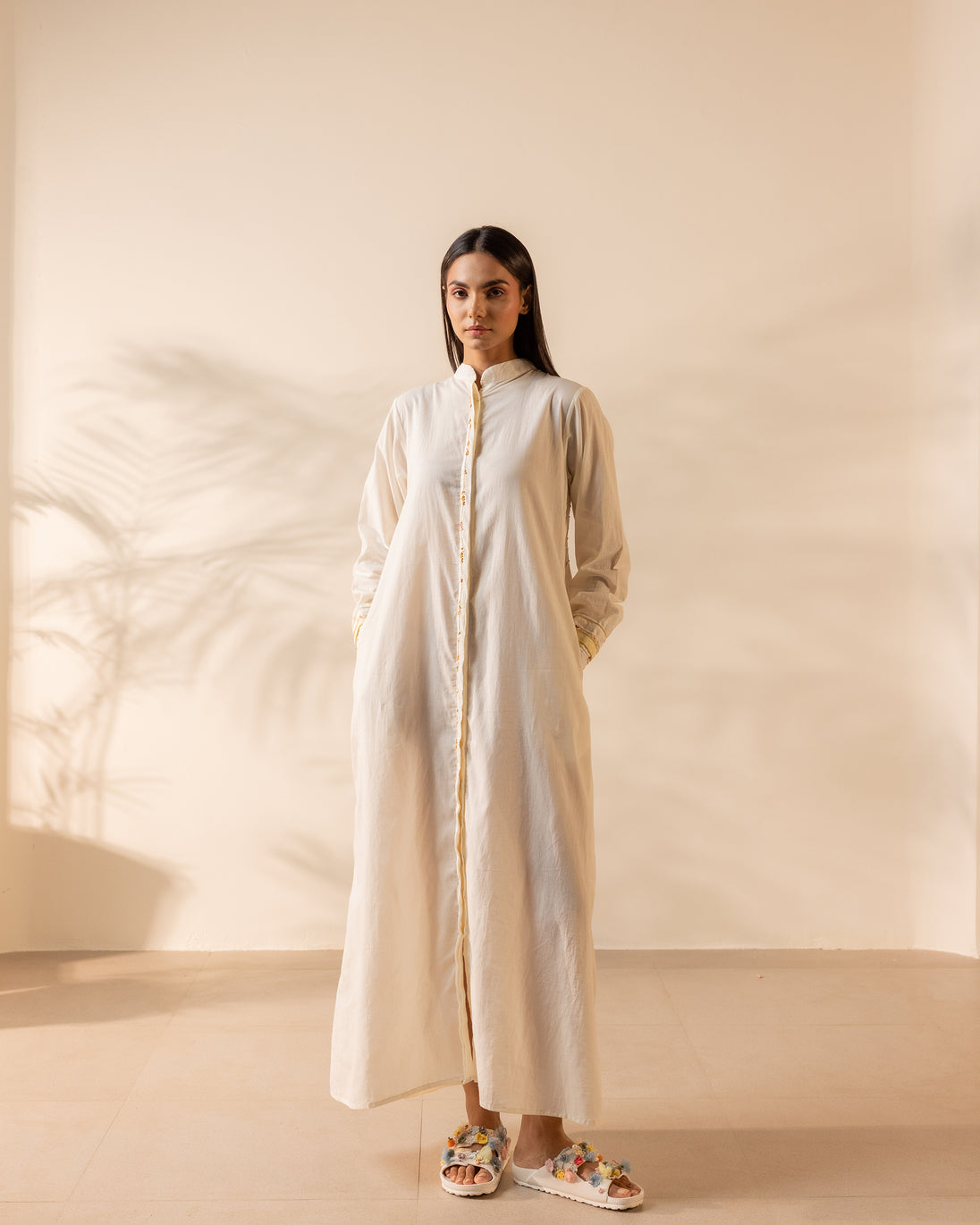
Check the care instructions before you buy. The Whimsy Dress is listed for hand washing or dry cleaning, which matters if you expect to wear it often. If you wear a slip or another layer underneath, keep that in mind when you choose the fabric and cut.
Putting It Together
Compare a dress you already own with the listed length and sleeves, choose a size from your body measurements, and decide how much room you want. Then read the fabric, cut and finishing details together. To compare more long dresses and silhouettes, the OurDve Dresses collection is a good next step.
FAQs
Is every maxi dress suitable for modest dressing?
No. “Maxi” only describes length. Coverage also depends on the sleeves, neckline, cut and fabric, so check all of these in the product details and photos. A maxi with short sleeves or a low neckline may need a layer, while one with full sleeves and a closed neckline may work on its own.
Should I size up for a more modest fit?
Not as a first step. Choose your size from your body measurements, because sizing up can also make the shoulders and sleeves sit lower than intended. If you want more room, look for a loose-fit design instead. The Sage Dress, for example, is listed as loose fit.
How do I know where a dress will fall on me?
Compare it with a dress you already own. Measure that dress from shoulder to hem, then compare the number with the listed dress length and try yours on to see where it ends. Your height affects the result, so a listed length alone won’t tell you where the hem lands on you.
What should I look for in a dress to wear under an abaya?
Check the sleeves and the skirt. Wide sleeves and fuller skirts add volume under another layer, while fitted cuffs are easier to slide an abaya sleeve over. If you wear the same abaya often, compare its sleeve opening with the dress’s listed sleeve length and cuff style.
How can I get more coverage from a light-coloured dress?
Check the product photos and description, and wear a slip or underdress if you want extra coverage. Fabric and construction vary from dress to dress, so a name like “cotton” or “poplin” isn’t enough to judge it.
How do I choose a modest dress for an evening occasion?
Use the same checks: length, sleeves, neckline and fit. Then look at the finishing. Details like embroidery or smocking can make a dress feel dressier without any extra styling, as on the Whimsy Dress.